
Lab Talk News in Brief: Golden Triangle property, new conference, acquisitions, R&D
27 Feb 2026
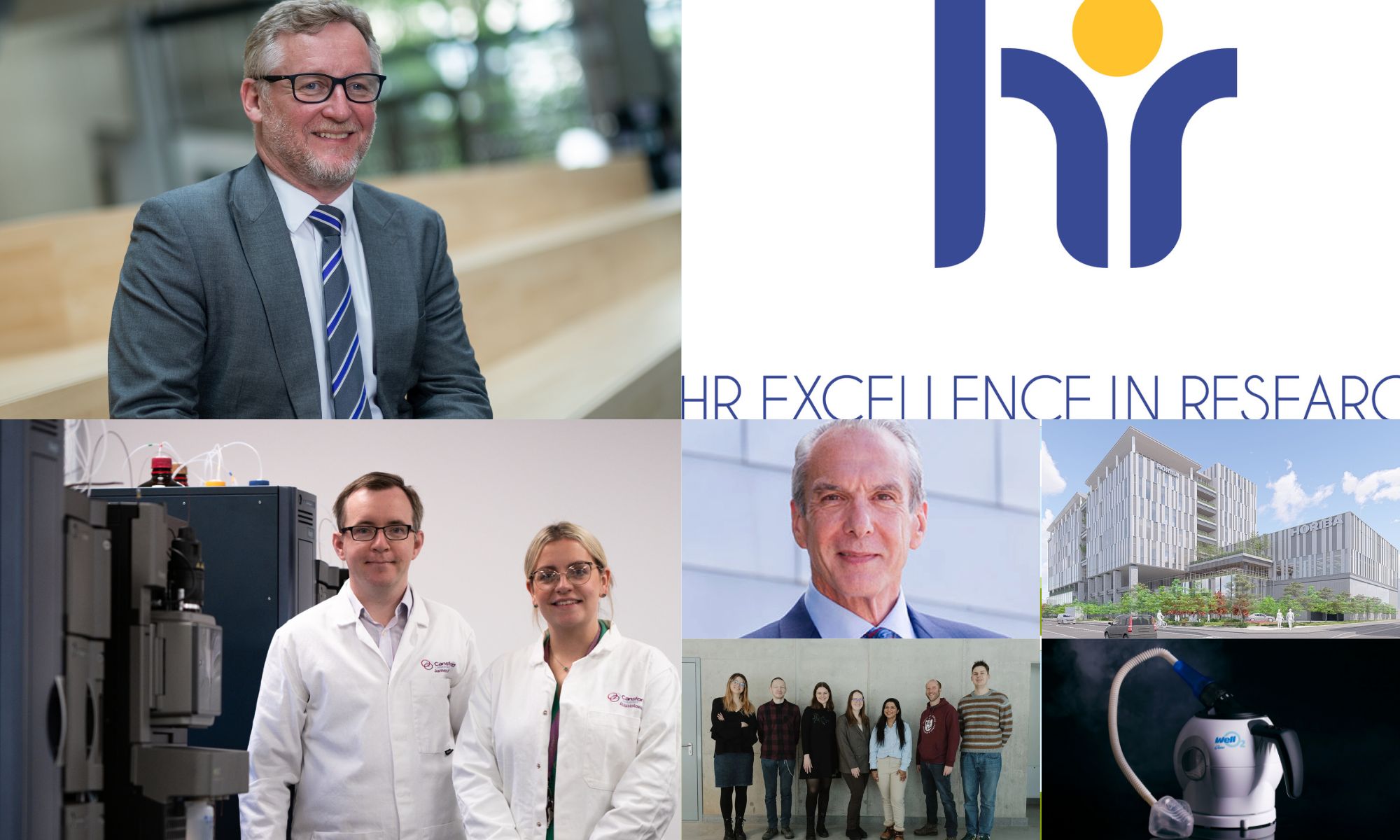
Oxfordshire’s laboratory property market recorded annual take-up of 620,200 sq ft in 2025, according to estate agent Bidwells’ latest Arc Market Databook covering office and laboratories.
This was heavily weighted to a few large projects, notably The Ellison Institute’s purchase of the 450,000 sq ft Daubney Project at Oxford Science.
However, reduced venture capital funding constrained demand from start-ups and scale-ups, contributing to a more cautious occupational backdrop across both lab and office sectors. While county lab availability stood at 27% at the end of 2025 and expected to rise as further space comes on the market, in Oxford city centre, it amounted to just 93,000 sq ft with no units above 20,000 sq ft. Bidwells forecast office rental growth of 3.7% per annum over both the next three and five years.
……………………………………………………………………………
Researchers at Vilnius University’s Life Sciences Center have identified a minimal bacterial defence system that detects viral attack and shuts down protein synthesis to stop infection. Published in Nature Structural & Molecular Biology, the study reveals how a retron-based molecular complex senses a viral DNA-degrading enzyme and activates a precise RNA-cleavage response. Using cryo-electron microscopy, the team uncovered the structural mechanism behind this switch-like activation, providing new insight into how even simple molecular systems can function as tightly regulated antiviral tools.
……………………………………………………………………………
Professor Stuart Reid CBE, president and principal of the Royal Veterinary College, is the 2026 recipient of the Calvin W. Schwabe Award – awarded by the US Association for Veterinary Epidemiology and Preventive Medicine in recognition of his lifetime achievements in veterinary epidemiology. The award was established in 2003 in honour of scientist and philosopher Calvin W. Schwabe, acclaimed as the founder of modern veterinary epidemiology.
……………………………………………………………………………
Cambridge Cognition Holdings neuroscience technology company, specialising in digital cognitive assessments, and Ivory, a venture-backed brain health company headquartered in India, have signed an agreement for the commercialisation of CANTAB Pathway™ across the healthcare and consumer health markets in India.Estimates indicate that India’s 60-plus population numbers 138 million, of whom as many as 34 million may be living with mild or major cognitive impairment. The country’s middle and affluent class, a key healthcare consumer segment is loosely estimated at 90-190 million people overall.
……………………………………………………………………………
The inaugural International Brain Health Conference takes place at the Sheraton Grand Hotel in Edinburgh from 18-19 May, bringing together global leaders in neuroscience, clinical research, public health and policy with focus on early intervention in brain health before dementia develops.
The University of Nevada’s professor Jeff Cummings will deliver the keynote speech and conference themes will span:
- Early detection and imaging and fluid biomarkers
- Women’s health and brain health, including menopause and sex-specific risk
- Brain health services and health economics
- Nutrition, sleep, and mental health
- Comorbidities and infectious disease
- Global and population-level approaches to prevention
……………………………………………………………………………
The Royal Veterinary College (RVC) retained its HR Excellence in Research Award following a thirteen-year review. Endorsed by the European Commission and managed in the UK by Vitae, the award provides an internationally recognised framework and mechanism for implementing the principles of the Concordat to Support the Career Development of Researchers.
……………………………………………………………………………
HORIBA is building a new global headquarters on the site of its current head office in Kyoto, Japan. Work began in December 2025, with completion scheduled for January 2028, the firm’s 75th anniversary year. The new headquarters building will be a 10-story structure with one basement level and will have approximately 11 times the floor area of the current head office.
……………………………………………………………………………
Cansford Labs, has become the first UK drug and alcohol testing lab to purchase Waters Xevo TQ-S Absolute XR LC/MS (liquid chromatography–mass spectrometry) machines, buying two at a combined cost of more than £1million. The acquisition follows rising concern over drug-related incidents and the need for fast, sensitive, and accurate testing in workplaces, schools, legal cases, and public health settings.
Daniel Lampiasi, the bioanalytical chemist responsible for calibrating the machines, commented: “The new systems provide better signal stability and improved sensitivity, which is especially important when working close to decision cut-offs. This increases our confidence in the results and provides additional assurance when working at low concentration levels.”
……………………………………………………………………………
Drs Kelly Gray and Elaine Duncan have joined the board of not-for-profit ELRIG, the voluntary organisation representing the global drug discovery community. Gray headed the Innovative Health Initiative portfolio at AstraZeneca. Duncan, a postdoctoral researcher investigating the role of G protein-coupled receptors in metabolic disease, also worked at Charles River Laboratories
……………………………………………………………………………
A sleep laboratory study conducted at the University of Turku and Turku University Hospital demonstrates that steam-assisted respiratory muscle training was associated with improvements in objectively measured sleep architecture among adults diagnosed with mild to moderate obstructive sleep apnoea (OSA).
The study utilised full-night laboratory polysomnography, regarded as the most comprehensive measurement method in sleep medicine. Results are published in the peer-reviewed Journal of Clinical Sleep Medicine.
https://link.springer.com/article/10.1007/s44470-025-00036-w
……………………………………………………………………………
Pic: top row – Stuart Reid, HR Excellence Award; bottom right – Cansford Labs; centre right – Jeff Cummings, HORIBA; bottom right – Vilnius research team, University of Turku
