
Lab Talk news in brief: London/Oxford lab space, city investment, charity fellowships, contracts
30 Sep 2025
The Royal Veterinary College has signed a memorandum of understanding with Emulate Inc. to build on prior research into organ-on-a-chip (Ooc) technology and support the development of animal species-specific organ-chip models.
Microfluidic technologies have become increasingly important in the health sciences partly due to enhanced restrictions on animal testing in preclinical safety.
By recreating physiologically relevant 3D microenvironments outside the body, both single- and multi-organ OoCs enable cell to cell interactions and tissue-like behaviour on a miniature scale to improve understandings of initial interactions of pathogens with the host.
Already used in some human disease research, OoCs have recently been applied in veterinary medicine, with the potential to advance a personalised medicine approach for companion animals and disease prevention and vaccine development for farm animals, said the RVC.
………………………………………………………………………………..
Bind Research and Twig Bio are the latest tenants of London BioScience Innovation Centre’s Apex facility in King’s Cross, which has now filled more than half its capacity within six months.
Bind Research, which occupies 2,746 sq. ft of lab and office space at the Apex, develops AI-driven tools and datasets to make disordered proteins accessible targets for life-saving treatments. It is the UK’s first not-for-profit Focused Research Organisation (FRO) supported by £12.9 million from the government’s Research Ventures Catalyst programme. Matching funding by industry, philanthropic, and charitable partners brought the total to £25.8 million.
Sustainable ingredients biotech, Twig Bio, combines AI, robotics, and bioengineering to rewrite the biological code of microbes, cutting development timelines from years to weeks. Using proprietary wet-lab data, the company produces bio-based alternatives to ingredients typically derived from fossil fuels or intensive farming.
………………………………………………………………………………..
Oxford Brookes University cleantech startup Mistify AI is claiming an AI-powered breakthrough in the fight against construction dust pollution and poor air quality.
By combining artificial intelligence, patented nozzle technology, and solar-powered atomised misting, says the firm, its solution can reduce PM 2.5 and PM 10 at source on construction and industrial sites, predicting when air quality will deteriorate and starting targeted ultra-fine misting before it worsens. It added that proof-of-concept testing demonstrated an 84% average reduction in PM 2.5 and 73% reduction in PM 10 particulates.
The firm said silica dust exposure was responsible for 500 UK workers’ deaths annually and air pollution linked to 36,000 deaths nationwide every year.
………………………………………………………………………………..
PacBio has partnered with epigenetics tools company EpiCypher to enable researchers to investigate the connections between genetic variation and gene regulation in a single assay.
The partnership brings EpiCypher’s CUTANA Hia5 enzyme to market for use with Fiber-seq assays on PacBio HiFi sequencing systems, giving researchers a new way to see chromatin biology at single-molecule resolution.
………………………………………………………………………………..
The Sainsbury-inspired charity Engineers in Business Fellowship (EIBF) is to be renamed Engineers and Scientists in Business Fellowship (ESBF) following last year’s decision to support scientists as well as engineers.
Each year, the charity awards more than fifteen Sainsbury Management Fellows MBA scholarships each valued at £50,000 at leading business schools.
Founded in 1987 by Lord Sainsbury of Turville, the charity has supported more than 400 Sainsbury Management Fellows who have created more than 300 new companies valued at nearly £5 billion, along with more than 21,000 jobs in the UK.
Additionally, the charity annually funds more than 50 enterprise competitions featuring engineers and scientists at UK universities.
………………………………………………………………………………..
The UK Cell and Gene Therapy (CGT) Catapult is collaborating with Belfast-based regenerative medicine company, VascVersa, to develop a predictive test to assess the clinical efficacy of their experimental cell therapy for ischaemic diseases. The Scottish National Blood Transfusion Service is also partnering with both organisations to optimise the therapy’s manufacturing.
Ischemia is caused by a reduction of blood flow to organs or tissues, often because of damage to or loss of blood vessels.
VascVersa’s innovative therapy aims to treat ischaemic diseases by stimulating?blood vessel repair and formation by administering pure and potent human vascular reparative cells. Due to the inherent complexity of the cells’ manufacturing process, CGT Catapult and VascVersa are developing a groundbreaking test to predict their effectiveness pre-transplant.
………………………………………………………………………………..
XR Therapeutics has secured a contract to deliver services to support children and young people under the care of Child and Adolescent Mental Health Services (CAMHS) at South West London and St George’s Mental Health NHS Trust, who are facing mental health challenges contributing to their anxieties in school.
XR Therapeutics uses immersive technology to create custom-built scenarios that link to the person’s anxieties and fears, which are then used by therapists to help the young people work through the situations that trigger them.
………………………………………………………………………………..
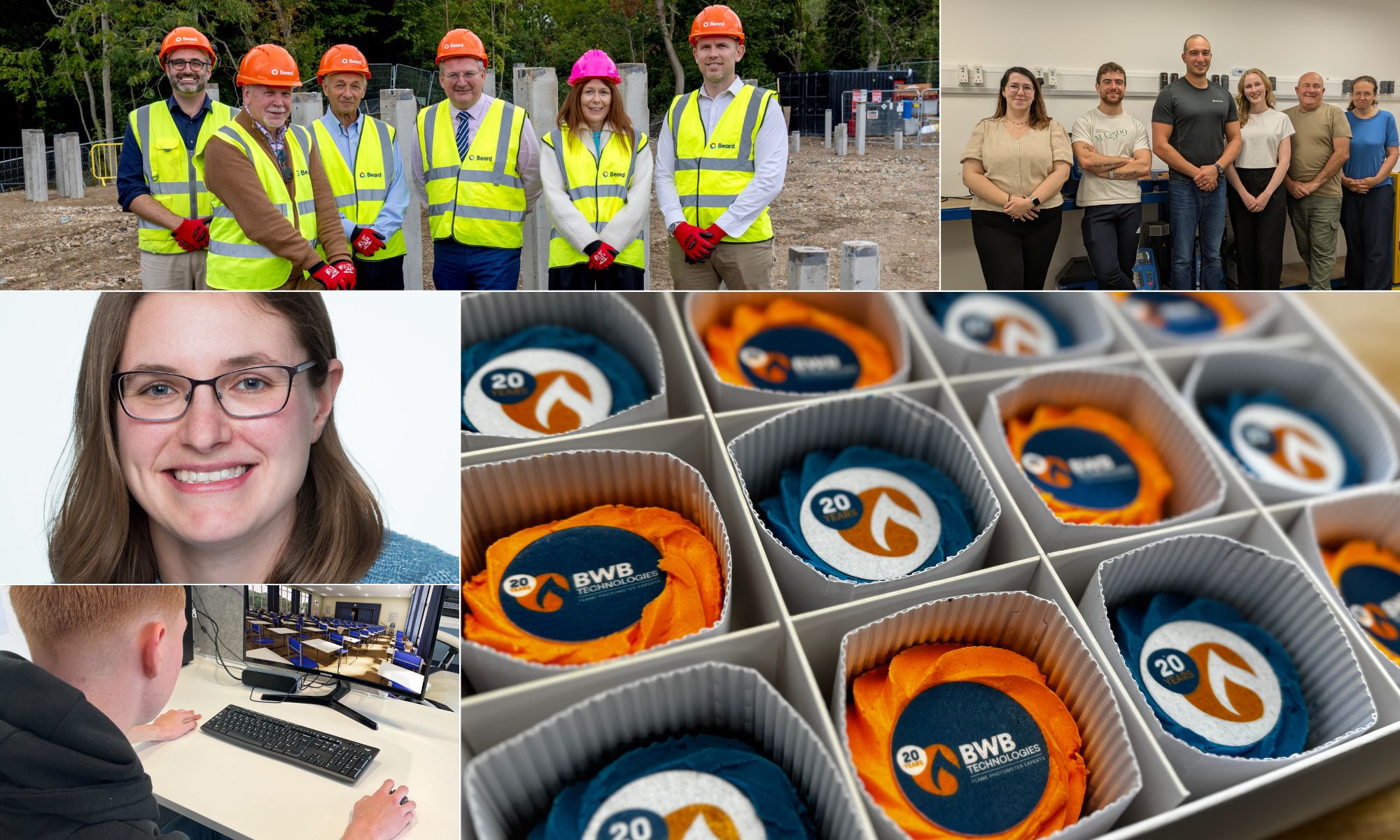
The Oxford Trust has begun construction of its new Aspen Building at the Wood Centre for Innovation in the city’s Headington area, marking its 40th anniversary year.
Beard Construction will deliver the £7 million expansion sited alongside the existing Linden Building and Science Oxford Centre.
The 17,000 sq ft (1,600 sq m) facility will provide CL II level laboratory and office space over two floors and will also feature a STEM resources room to enable the Trust to expand outreach for its education and engagement programmes, delivered by Science Oxford. Once fully operational, it is anticipated to create up to 80 new on-site jobs.
………………………………………………………………………………..
Dr Sarah Hill, Royal Veterinary College research fellow in Genomic Epidemiology (Infectious Diseases), has been awarded a Future Leaders Fellowship by UK Research and Innovation (UKRI). It will support her exploration of the use of virus genomic approaches to improve aquaculture disease control and promote environmental sustainability.
UKRI’s flagship funding initiative, providing long-term support to outstanding early-career researchers has this year awarded a total of £120 million to enable 77 researchers to lead vital research, collaborate with innovators and develop their careers.
Hill’s award will enable her to build on her previous work exploring the epidemiology and evolution of viruses in natural populations, including zoonotic viruses, to help improve disease control strategies amongst aquatic populations. This work will employ advances in virus genomics and computational tools to analyse genomes alongside other big data types.
………………………………………………………………………………..
Scindo, a UK-based startup developing an AI platform to discover and design next-generation enzymes, has raised £4 million in funding “to enable bio-based ingredients and sustainable chemistry across multiple high-value sectors”.
Co-led by Kadmos Capital and Clay Capital, with participation from food and beverage company Paulig’s venture arm PINC and existing investors Synbioven, AgFunder, SOSV, Farvatn Venture and Savantus Ventures.
………………………………………………………………………………..
BWB Technologies celebrated its 20th anniversary last month, marking two decades of flame photometry since its beginnings as a UK start-up.
Founded in 2005 by Gary Bukamier, the Newbury-based business focused on simplifying elemental analysis through instrumentation, in 2007 launching the BWB-1, billed as the first flame photometer to offer simultaneous multi-element detection with user-friendly controls.
Since then, BWB has released more than a dozen models, with technology supporting research applications in environmental monitoring, pharmaceuticals, agriculture, and food production, plush instruments in use across more than 100 countries.
A major milestone was the introduction of its Automatic Fluid Handling System, described by the firm as “the first reliable automation of the flame photometry process, delivering fast, precise sample handling without reliance on AI or cloud-based systems”. Acquisition of Rank Brothers in 2022 expanded its capabilities in dissolved oxygen measurement and magnetic stirring.
………………………………………………………………………………..
Harwell claims to be the first science campus to adopt a commercial smart grid, providing sustainable power to thousands of scientists, engineers and innovators. The firm stated that, by avoiding tens of millions in grid reinforcement works, SNRG’s smart grid would unlock £300 million investment, tripling lab space and advanced manufacturing facilities.
Harwell stated that occupiers would access solar power at a price 35.6% below the 2024 UK average, as well as avoiding 230 tonnes of carbon in the first year.
………………………………………………………………………………..
