
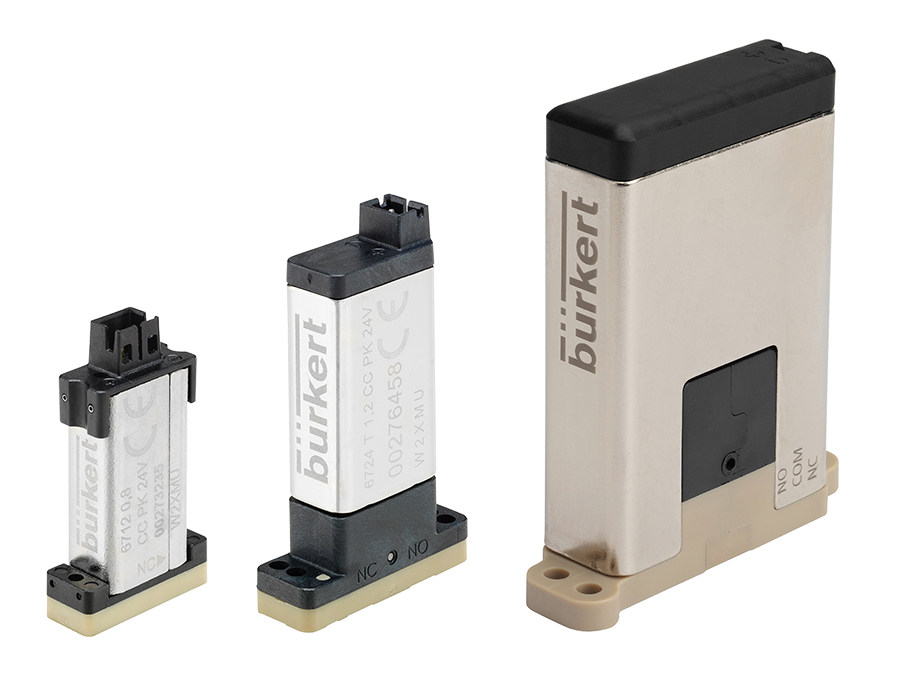
In medical devices and laboratory systems, reliable liquid handling isn’t optional—it’s critical. Yet confirming valve performance often means adding downstream sensors, electronics, and design complexity. Bürkert’s new ValveInsight diagnostics changes that equation by turning electrodynamic Whisper Valves themselves into intelligent sources of performance data.
From dialysis machines to point-of-care devices, precise valve switching is essential for safety, sterility, and accurate dosing. A valve that fails to open or close correctly can restrict flow, cause leaks, or risk contamination. In laboratory workflows, even subtle deviations in valve actuation can result in inaccurate measurements, wasted samples, or delayed fault detection—especially when working at microlitre volumes.
Whisper Valves are designed for fast switching, high-pressure resistance, and ultra-low noise—making them ideal for both patient-facing and lab environments. Traditionally, however, they have operated without direct feedback on switching behaviour. ValveInsight introduces a more innovative approach, using advanced algorithms to analyse the induced current generated as the valve’s electrodynamic actuator moves within a magnetic field.
By interpreting this induced current, ValveInsight can confirm valve switching, monitor switching time, and detect anomalies such as blockages, wear, or changing process conditions. Crucially, this intelligence is delivered without additional sensors. The algorithms are available as open-source on GitHub and can be integrated directly into existing electronics, enabling fast adoption and minimal redesign.
With customizable diagnostics, support for preventive maintenance, and evaluation tools to accelerate development, ValveInsight adds a powerful feedback layer to liquid handling systems—enhancing safety, reducing waste, and unlocking greater process insight across medical and laboratory applications.
Learn more about ValveInsight and Whisper Valve diagnostics at Bürkert.


