
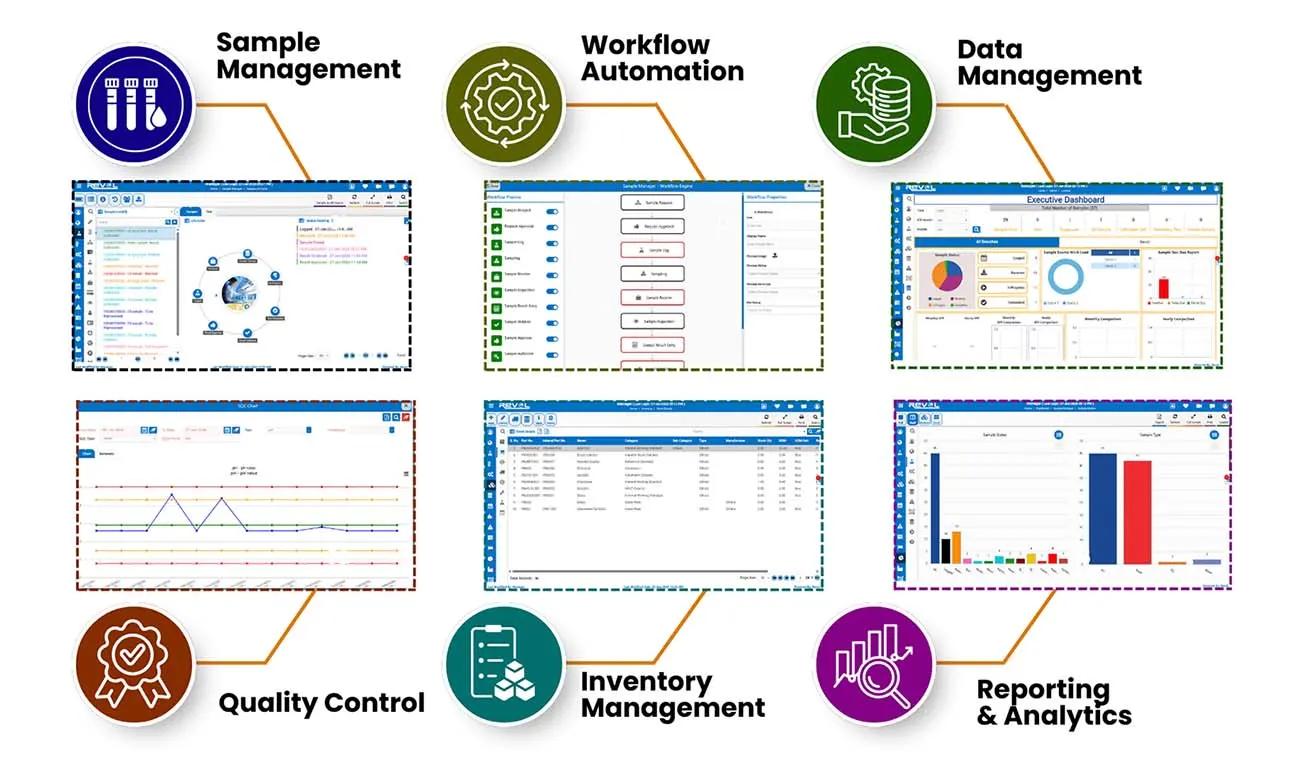
From sample tracking and workflow automation to data management and regulatory compliance, Laboratory Information Management Systems (LIMS) are helping laboratories improve accuracy, productivity and traceability.
As laboratories handle increasing sample volumes and more complex testing requirements, managing information efficiently has become essential. A Laboratory Information Management System (LIMS) provides a centralised software platform for organising samples, managing laboratory workflows and maintaining accurate records throughout the testing process.
Rather than relying on spreadsheets, paper records and disconnected systems, laboratories can use LIMS software to track samples from receipt through analysis, reporting and final disposal or storage.
Modern LIMS platforms typically combine six important functions: sample management, workflow automation, data management and audit trails, instrument integration, reporting, and quality control and compliance support.
By connecting these activities, laboratories can reduce repetitive administrative work, minimise transcription errors and improve visibility across testing operations. Automated processes can also help shorten turnaround times while ensuring that information remains accessible and traceable.
LIMS technology is used across numerous sectors, including pharmaceutical manufacturing, biotechnology, clinical diagnostics, environmental testing, food and beverage production, and industrial quality control.
For laboratories working within regulated environments, appropriately configured LIMS software can also support compliance with requirements such as FDA 21 CFR Part 11, ISO/IEC 17025, Good Laboratory Practice (GLP) and Good Manufacturing Practice (GMP).
Watch the video from Revol LIMS for a straightforward introduction to laboratory information management systems, their essential features and the practical benefits they can offer laboratories of different sizes and specialisms.
