
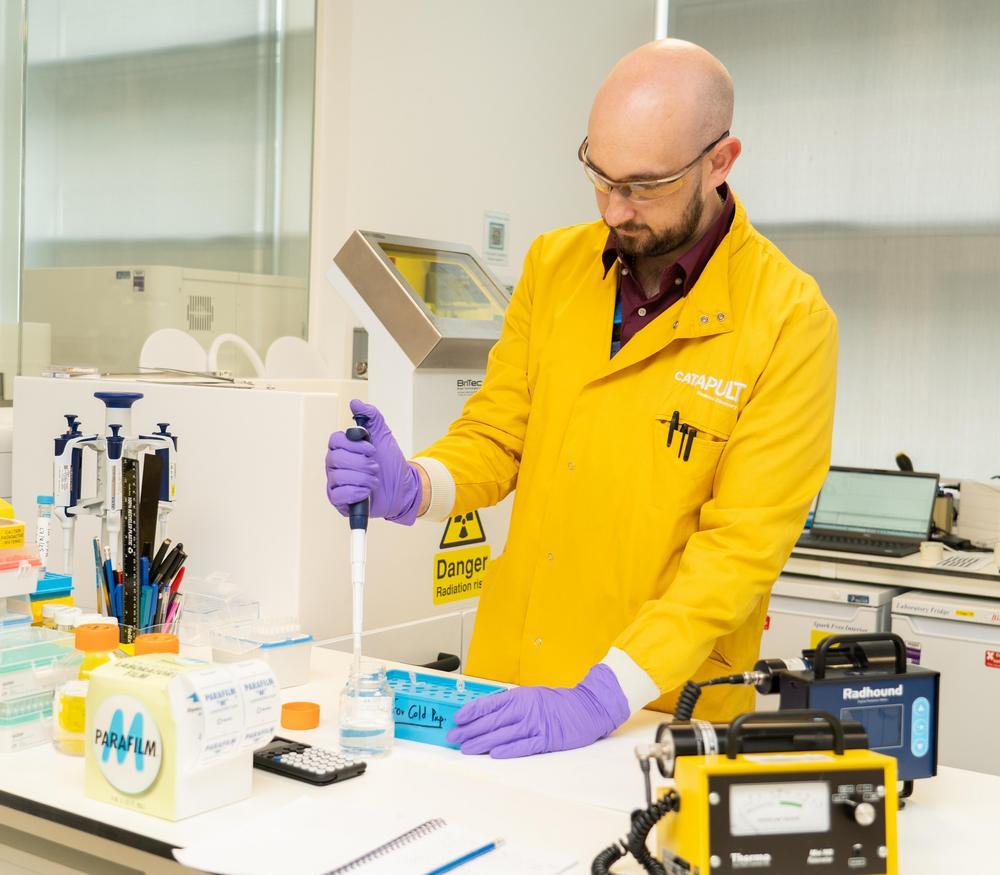
Medicines Discovery Catapult and Astral Systems have secured £1.54 million from Innovate UK to develop connected, automated laboratory processes that could improve the speed, consistency and scalability of radiopharmaceutical manufacturing.
Medicines Discovery Catapult (MDC) and Astral Systems have been awarded £1.54 million in funding to develop digital laboratory technologies designed to support the next generation of radiopharmaceutical medicines.
The Innovate UK-funded project aims to modernise the development and production of radiopharmaceuticals, which use radioactive materials for diagnostic imaging and targeted treatments, particularly in cancer care.
Unlike conventional medicines, radiopharmaceuticals present significant manufacturing challenges because their radioactive components decay over time. This makes rapid, reliable production and efficient delivery essential to maintaining their effectiveness.
The collaboration will combine MDC's expertise in radiopharmaceutical development with Astral Systems' compact multi-state fusion technology and engineering capabilities.
Together, the organisations plan to replace fragmented laboratory procedures with integrated digital workflows, improving data collection, process automation and information transfer between production stages.
The project will also introduce virtual 'digital avatars', allowing researchers to simulate and optimise laboratory processes before conducting physical experiments. This approach could reduce development time, improve reproducibility and support more informed manufacturing decisions.
Copper-64 and Copper-67, radionuclides used in diagnostic imaging and targeted radiopharmaceutical therapy, will serve as initial test materials. The resulting processes are intended to be adaptable to other radionuclides and laboratory environments.
Supported through Innovate UK's Labs of the Future competition, the initiative aims to strengthen the UK's radiopharmaceutical manufacturing capabilities and help translate promising research into clinically available treatments.
As demand for precision medicines continues to increase, the partners believe connected laboratory systems and automation will be important in improving production efficiency, reliability and future manufacturing capacity.
