For the first time, insufficient funding ranks as the sector’s top concern, cited by 44% of respondents. In 2025, rising consumables prices dominated; in 2026, the challenge has shifted toward more fundamental budget shortfalls. According to Starlab, this signals a structural issue that could threaten long-term research capacity.
Cost-cutting remains widespread, with 57% of laboratories implementing savings measures. However, 74% report reducing investment in equipment and infrastructure, and 54% have frozen hiring—despite ongoing skills shortages. Employee satisfaction has fallen sharply from 76% in 2025 to 63% in 2026, and one in three respondents reports high stress levels.
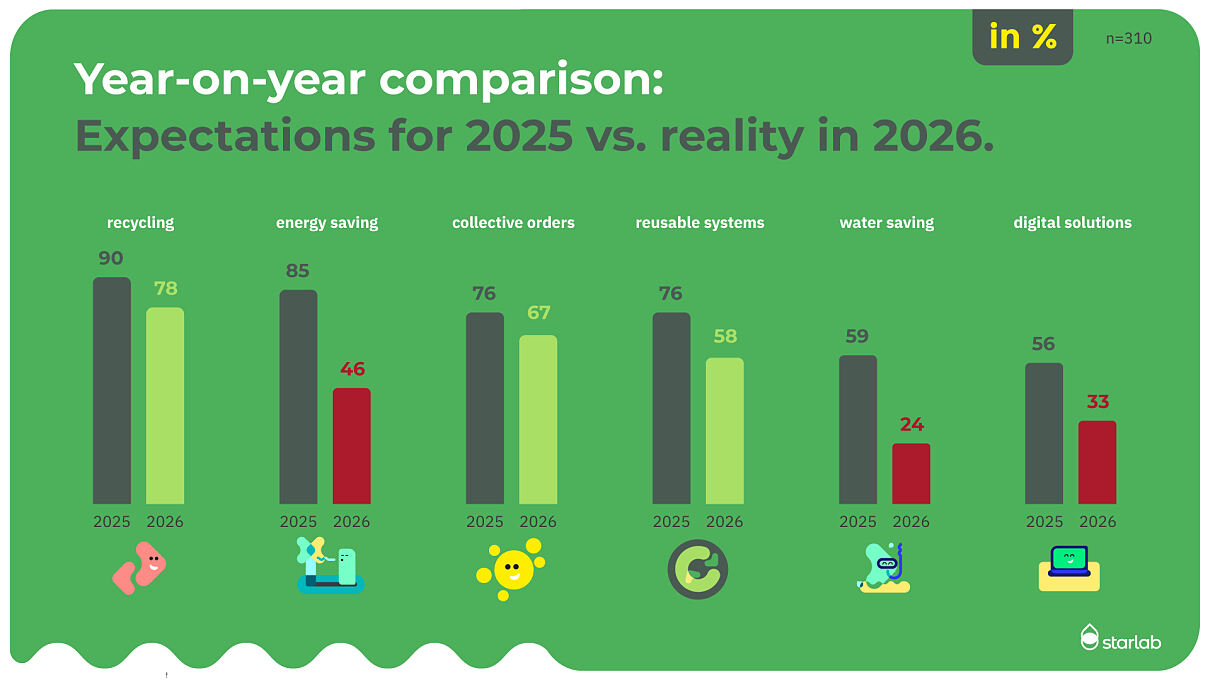
Despite financial strain, laboratories continue to pursue sustainability and digitalisation. Recycling programmes are now established in 78% of labs, while 58% use reusable systems and 64% are open to recycled materials if quality standards are met. Environmental and economic motivations together drive around 80% of respondents.
Artificial intelligence is also gaining traction: 46% use AI occasionally and 13% regularly, with limited concern over job displacement. Interdisciplinary thinking and digital skills are viewed as essential future competencies.
Starlab concludes that Europe’s laboratories possess both the willingness and the tools for change—but require supportive framework conditions to unlock their full potential.