
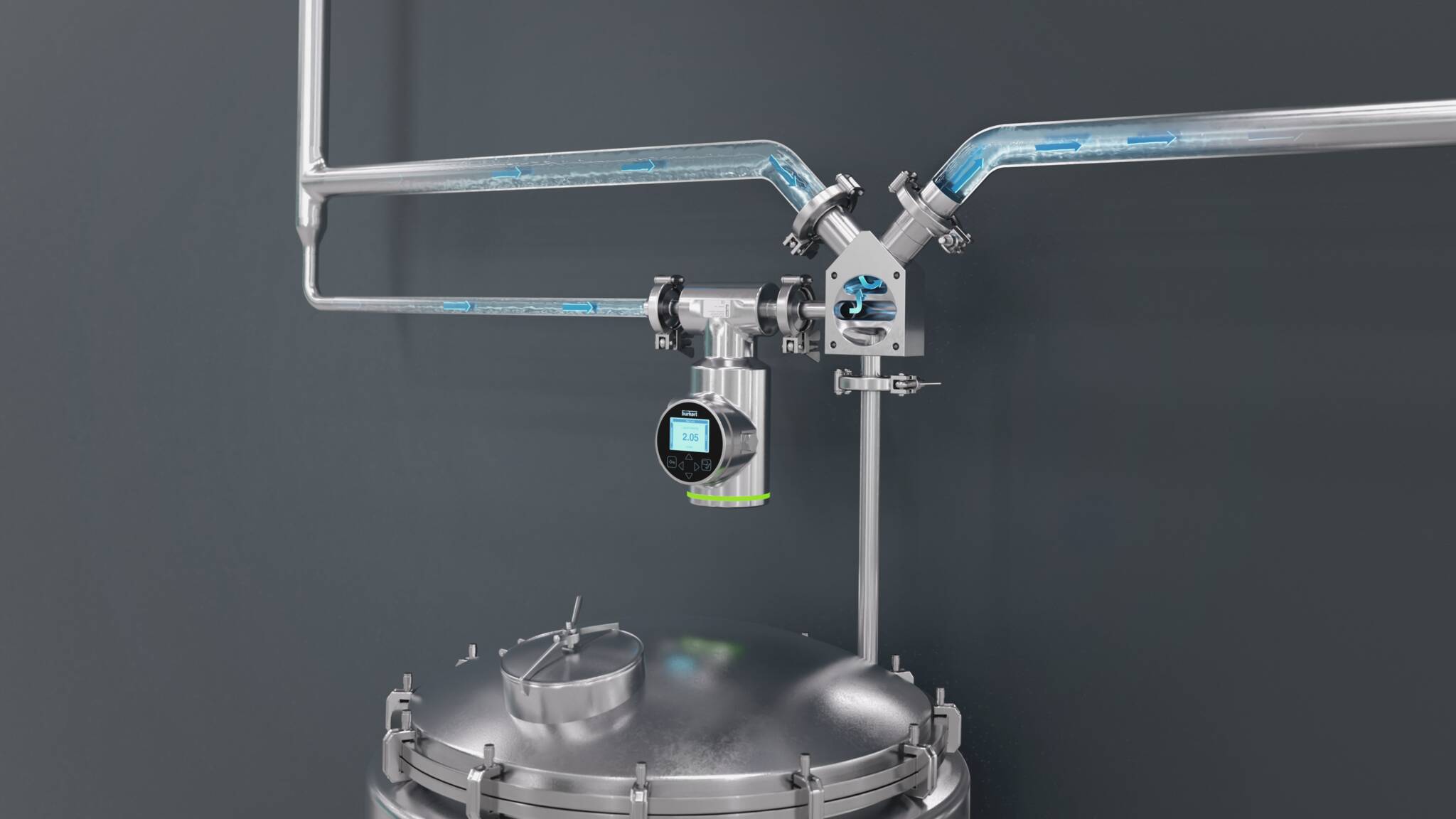
Maintaining hygienic conditions within purified water (PW) and water for injection (WFI) distribution systems is essential for pharmaceutical manufacturing, where even small variations in flow can increase the risk of biofilm formation and compromise water quality.
While the main distribution loop is designed to maintain continuous circulation, point-of-use (POU) sub-loops present a greater challenge. If flow becomes intermittent, slows significantly or reverses direction, stagnant conditions can develop, creating an environment where bacteria can establish and biofilms can form. Traditional approaches, including manually adjusted T-valves or basic flow monitoring, can improve visibility but do not guarantee the consistent flow conditions needed to minimise contamination risks.
A growing alternative is the use of intelligent, automated sub-loop systems that combine continuous flow control with hygienically optimised instrumentation. By continuously monitoring flow velocity, volumetric flow and temperature, these systems can maintain the circulation rates required to reduce the likelihood of biofilm development while also providing accurate, repeatable dosing at the point of use.
One technology supporting this approach is Surface Acoustic Wave (SAW) flow measurement. Unlike conventional flowmeters that may introduce features into the flow path, SAW sensors are mounted externally to a straight measuring tube, enabling accurate flow measurement while supporting hygienic design. The simplified internal geometry reduces potential dead legs and allows more effective cleaning, making the technology well suited to PW and WFI applications.
Valve design also plays an important role. Modern multi-way diaphragm valves can combine continuous recirculation and dosing functions within a single compact unit, reducing system complexity while eliminating unnecessary pipework where contamination could develop. Fast switching between flow paths helps maintain uninterrupted circulation while ensuring precise dispensing.
When integrated into a fully automated control system, hygienic flow measurement and valve technology can optimise water usage, improve dosing accuracy and simplify operation. Automated monitoring also provides valuable process data to support validation and regulatory compliance.
As pharmaceutical manufacturers continue to focus on product quality and operational efficiency, intelligent PW and WFI sub-loop designs are helping to reduce biofilm risk while delivering greater consistency, reliability and control throughout ultra-pure water distribution systems.


