
As the chemical industry accelerates its transition towards a circular economy, waste plastic pyrolysis oil (WPPO) is emerging as an increasingly valuable alternative to crude oil. Produced by converting plastic waste into reusable hydrocarbon feedstocks, WPPO offers a more sustainable route for chemical manufacturing while reducing dependence on virgin fossil resources.
However, unlike conventional petroleum, pyrolysis oils often contain contaminants originating from the plastics' previous life cycle. Fluorine is one of the most critical. Even at low concentrations, fluorine can poison refinery catalysts, accelerate corrosion and compromise downstream processing, making rapid and reliable analysis essential before these feedstocks enter production.
Traditionally, fluorine analysis has relied on combustion ion chromatography (CIC), a proven but relatively time-consuming technique. Analytik Jena has developed an alternative approach that combines pyrohydrolytic high-temperature combustion with High-resolution Continuum Source Molecular Absorption Spectrometry (MAS), delivering accurate fluorine determination with significantly faster turnaround times.
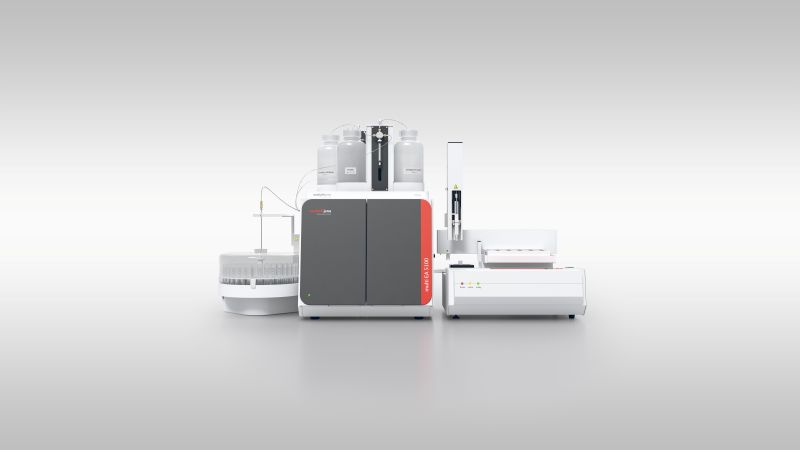
The workflow uses the ICprep for safe, self-optimising combustion of organic samples, while the contrAA 800 G detects fluorine with high sensitivity after conversion to gallium fluoride molecules. Beyond fluorine analysis, the contrAA 800 G also performs conventional atomic absorption spectroscopy (AAS), enabling elemental metal analysis on the same platform and reducing the need for additional instrumentation.
Offering sensitivity and accuracy comparable to established CIC methods, the combined ICprep and contrAA 800 G solution improves laboratory efficiency while lowering operational complexity. By providing fast, dependable fluorine analysis for pyrolysis oils, it helps laboratories support the growing adoption of circular feedstocks and contributes to a more sustainable, resilient petrochemical industry.
