
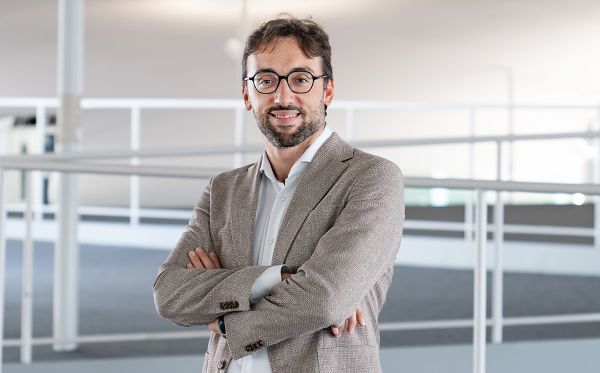
Swiss-based neuroscientist Gioele La Manno has received international recognition for developing a three-dimensional map of brain lipids, revealing new insights into brain organisation, cellular identity and neurological function.
Gioele La Manno, Ph.D., of École Polytechnique Fédérale de Lausanne (EPFL), Switzerland, has been named the winner of the 2026 Eppendorf & Science Prize for Neurobiology for pioneering research into the distribution of lipids throughout the brain.
Working with colleagues, La Manno developed computational techniques to combine millions of imaging mass spectra, producing the first comprehensive 3D lipid atlas of the adult mouse brain.
Although lipids are essential components of cell membranes and the protective myelin surrounding nerve fibres, their distribution and biological significance have remained relatively unexplored.
The research identifies distinct patterns of lipid composition, described as ‘lipizones’, which may help explain differences between brain regions, cellular identities and physiological states. These findings could provide new opportunities to investigate brain development, neurological disorders and disease mechanisms.
Two additional researchers were recognised as finalists. Zuri Sullivan, Ph.D., of MIT and the Whitehead Institute, was acknowledged for investigating how the brain responds to different immune challenges, while Alexander Shakeel Bates, Ph.D., of Harvard Medical School, was recognised for his work mapping neural connections in fruit flies.
Established in 2002, the Eppendorf & Science Prize celebrates outstanding early-career achievements in neurobiology.
The 25th award presentation will take place on 15 November 2026 in Washington, D.C., during the Society for Neuroscience meeting.
