
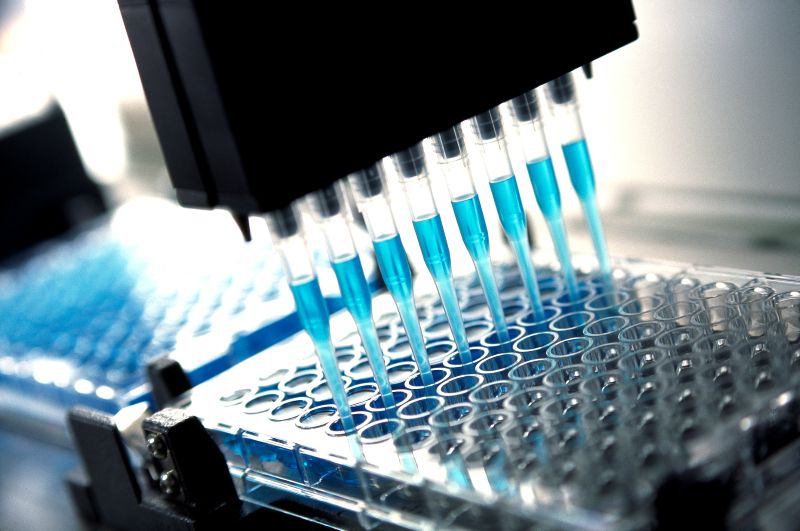
From liquid handling precision to operator comfort and long-term reliability, the motor technology inside electronic pipettes plays an important role in laboratory performance. Understanding the differences between motor designs can help laboratories and equipment manufacturers select the most suitable solution.
Accurate liquid handling is fundamental to laboratory research, diagnostics and quality control. Even small variations in pipetted volumes can affect experimental results, making precision and repeatability essential considerations when selecting laboratory equipment.
Electronic pipettes have become increasingly popular as laboratories seek to improve consistency, reduce manual handling and minimise operator fatigue. Although their benefits are widely recognised, the motor technology responsible for controlling liquid movement is an important factor in determining overall performance.
Moving beyond manual pipetting
Traditional air-displacement pipettes rely on a spring-loaded piston operated by the user. Differences in technique, applied force and handling can introduce variations between operators or individual pipetting cycles.
Electronic pipettes replace this manual action with motor-driven piston movement, providing more consistent control over aspiration and dispensing.
This can be particularly valuable in laboratories undertaking repetitive or high-volume liquid handling, where operator fatigue and repetitive strain are additional concerns.
However, electronic pipettes are not identical. Their accuracy, speed, size, maintenance requirements and operating characteristics depend partly on the motor and drive mechanism selected.
Brushed DC motors: compact and efficient
Brushed direct current (DC) motors are widely used in compact precision equipment because of their relatively simple control requirements, smooth operation and efficient power delivery.
For electronic pipettes, their small dimensions can be advantageous where weight and available space are limited.
DC motors generate rotational movement, meaning additional mechanical components are required to convert rotation into the linear piston movement needed for pipetting.
They can provide rapid movement and responsive control, making them suitable for applications where dispensing speed and compact design are important.
However, brushes and other moving components experience wear, potentially increasing maintenance requirements over extended operating periods.
Stepper actuators: precision and repeatability
Stepper linear actuators provide an alternative approach, combining controlled motor movement with a mechanism designed to produce linear displacement.
Their ability to move in defined, repeatable increments makes them particularly suitable for applications requiring precise piston positioning.
Unlike conventional rotary DC motor arrangements, integrated linear actuators can reduce the need for additional motion-conversion components, potentially simplifying the overall mechanism.
Stepper technology can also offer consistent positioning across repeated operating cycles, an important consideration in laboratories handling large numbers of samples.
For equipment manufacturers, the combination of positional control, repeatability and relatively compact construction can support the development of ergonomic handheld instruments.
However, motor selection must account for operating speed, power consumption, heat generation and the specific force requirements of the application.
Matching motor performance to laboratory requirements
Choosing between brushed DC motors and stepper actuators involves more than comparing technical specifications.
For example, a laboratory prioritising rapid sample processing may require different motor characteristics from one performing highly controlled, low-volume dispensing.
Other considerations include the frequency of use, expected equipment lifespan, calibration stability, maintenance requirements and operator comfort.
Importantly, motor performance must be considered alongside the complete pipetting mechanism, including piston design, mechanical tolerances and electronic control.
Working with specialist motion technology suppliers during equipment development can help manufacturers optimise these interacting elements rather than treating motor selection as an isolated decision.
Ultimately, effective electronic pipette design depends on achieving the right balance between accuracy, speed, reliability and ergonomics.
As laboratories continue to increase automation and sample throughput, carefully engineered motion systems will remain essential to delivering reproducible results while supporting efficient, comfortable and dependable laboratory operation.
